Source Customized Ivory Board Exercise Book for School, Gift, Promotion
Compare 30 listings for customized ivory board exercise book options tailored for school, gift, and promotion uses. Buyers can review specifications like binding, paper weight, and customization features to find the best fit for their needs; compare the available evidence and request quotations based on your requirements.
Key considerations
Products List







Comprehensive Sourcing Guide
Customized Ivory Board Exercise Book Sourcing Guide
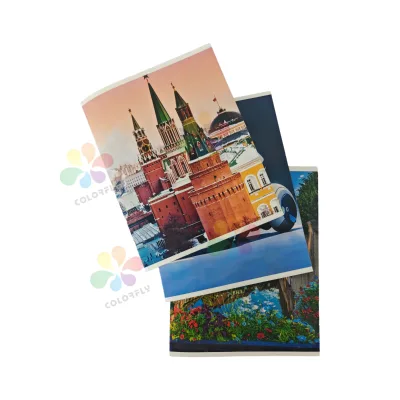
Buyers seeking customized ivory board exercise books must first align their design requirements with the observed manufacturing capabilities, noting that cover materials often range from 190g to 450g in weight to ensure durability. The supply chain frequently offers OEM design services where suppliers provide free cover designs, allowing purchasers to specify branding elements like logos or specific color profiles such as CMYK or Pantone. This flexibility supports diverse branding needs for promotional campaigns or school supplies, provided the buyer clearly communicates their visual identity expectations during the initial inquiry phase.
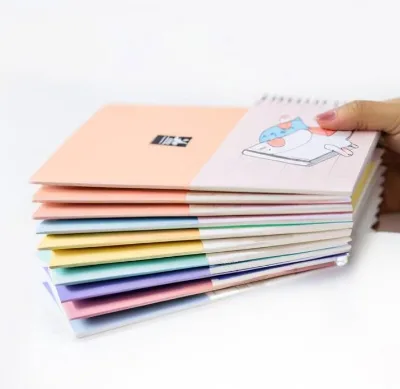
Procurement teams should also verify the binding method, as listings indicate a mix of perfect binding and saddle stitching options depending on the specific model and page count. While some products feature 40 to 60 sheets, others accommodate 80 to 120 sheets, requiring careful selection based on intended usage volume. The inner pages typically utilize offset or woodfree paper, which affects the writing experience and ink absorption. Confirming these structural details early prevents mismatches between the ordered product and the functional requirements of the end-user market.
Product Scope and Observed Listing Signals
The market for these notebooks reveals a distinct focus on cost-effective solutions for gift, promotion, and school applications, with observed price points ranging from $0.03 to $7.88 per unit. This wide variance suggests that pricing is heavily dependent on order quantity, with minimum order quantities starting as low as 50 units but potentially reaching 120,000 for large-scale distribution. Buyers must recognize that the "cheap" label often correlates with specific material choices and volume commitments, necessitating a clear definition of budget constraints before engaging with suppliers.
Listing signals also highlight a strong orientation toward the African market, with specific mentions of export destinations and tailored packaging for long-distance shipping. Products are frequently described as factory direct sales, implying a direct relationship between the manufacturer and the buyer which can streamline communication. However, the presence of bespoke options for inside printing and page customization means that standard listings may not fully represent the final product. Buyers should treat general descriptions as starting points and request specific samples to validate that the observed features match their exact needs.
Technical Specifications to Verify
Technical verification begins with the physical dimensions, as observed standards include A5, A4, and specific measurements like 17x22cm or 16.5x24cm. Since suppliers accept custom sizes, buyers must provide precise dimensional requirements to avoid production errors. The cover material is often specified as 190g ivory board or soft paper, which dictates the rigidity and feel of the notebook. Ensuring the correct cover weight is critical for maintaining the structural integrity of the book, especially for items intended for heavy daily use in school or office environments.
Inner page specifications require equal attention, with sheet counts varying between 40-60 and 80-120 sheets depending on the model. The paper type is another critical variable, with options including woodfree, offset, or recycled materials that influence the writing surface quality. Buyers should confirm the exact paper weight and finish to ensure compatibility with their preferred writing instruments. Additionally, the binding method, whether perfect binding or saddle stitched, must be explicitly confirmed to guarantee that the pages remain securely attached during extended use.
Compliance and Safety Documentation
While specific certification data is not universally present in the provided listings, buyers should proactively request documentation regarding material safety and environmental standards. The supply chain mentions FSC as a potential background certification, suggesting that some manufacturers may offer sustainably sourced paper options. It is essential to verify if the specific order requires FSC certification or other regional compliance marks, particularly if the products are destined for markets with strict environmental regulations. Relying on general claims without written proof can lead to compliance gaps in the final supply chain.
Safety documentation should also cover the inks and adhesives used in the printing and binding processes. Since the printing method is listed as CMYK or Pantone, buyers need to ensure that the inks meet relevant safety standards for children's products if the exercise books are intended for school use. The supplier's ability to provide test reports for heavy metals or other hazardous substances is a key indicator of their quality control maturity. Without explicit confirmation of these safety attributes, buyers assume the risk of non-compliance with local import regulations.
Cost Drivers and Commercial Terms
Cost structures for customized ivory board exercise books are driven primarily by order volume, with prices explicitly stated as subject to order quantity. The observed minimum order quantities range significantly, meaning that small buyers may face higher per-unit costs compared to large-volume purchasers. Buyers must calculate the total landed cost, including the impact of shipping methods, as sea freight is noted as the best option for large shipments. Understanding the relationship between volume discounts and material costs is vital for negotiating favorable commercial terms.
Payment terms and sample policies also play a significant role in the overall cost of procurement. Suppliers generally accept sample orders with a lead time of 3-5 working days, allowing buyers to validate quality before committing to large production runs. Payment terms are often open to discussion, providing an opportunity for buyers to negotiate favorable conditions based on their credit history and order size. It is crucial to clarify all financial obligations, including sample fees and shipping costs, to avoid unexpected expenses that could erode the projected profit margins.
Supplier Qualification and Quality Control
Supplier qualification should focus on verifying their manufacturing capabilities, as listings indicate a direct manufacturer presence with OEM and ODM services. Buyers must confirm that the supplier has the capacity to handle their specific customization requirements, such as bespoke inside printing or custom logo placement. The ability to offer free designs is a valuable service, but it requires clear communication to ensure the final output matches the buyer's vision. Establishing a direct line of communication with the manufacturer helps in resolving technical issues quickly and ensures accountability for the final product quality.
Quality control processes must be rigorously defined, particularly regarding the consistency of binding and printing quality. Since the products are packed in shrink bags and cartons, buyers should verify the packing specifications to ensure protection during transit. The observed packing ratios, such as 3 pieces per shrink bag or 12 pieces per shrink bag, indicate standardized packaging practices that need to be maintained. Buyers should request a quality control plan that outlines inspection points for cover printing, page alignment, and binding strength to minimize the risk of receiving defective goods.
Long-Term Procurement Checks
Long-term procurement success depends on establishing a reliable supply chain that can consistently meet volume and quality demands over time. Buyers should monitor the supplier's ability to maintain lead times, which are currently estimated at 3-5 working days for samples but may vary for bulk production. Consistency in material sourcing, particularly for the ivory board and inner paper, is essential to prevent variations in product quality between different production batches. Regular audits and performance reviews help ensure that the supplier continues to meet the evolving needs of the buyer's business.
Strategic planning should also include contingency measures for supply chain disruptions, given the reliance on specific export routes and shipping methods. The observed focus on the African market suggests that the supplier has experience with international logistics, but buyers should verify their ability to handle changes in shipping conditions or regulatory requirements. Building a relationship based on clear communication and mutual understanding of quality standards will facilitate smoother transactions and reduce the risk of delays. Continuous engagement with the supplier ensures that the procurement process remains efficient and responsive to market changes.
FAQs
How is the customized ivory board exercise book manufactured and bound?
The exercise book is produced with perfect binding or saddle stitching, depending on the model you choose. Inner pages are made from offset or woodfree paper, typically 40 to 120 sheets, and the cover is 190g ivory board or soft paper. Both binding options support CMYK or Pantone printed covers with a customized logo.
What customization options are available for the exercise book cover and inside pages?
Cover printing is done in CMYK or Pantone with free design support and OEM cover artwork accepted. Inside pages are bespoke, meaning page count, inside color, ruling, and other inside prints can be tailored. Sizes follow standard A5, A4, 17x22cm, or 16.5x24cm, and your own size is also accepted.
Which paper weights and page counts can I choose for the exercise book?
Inner pages use offset paper at 50g weight, with page counts of 40 to 60 sheets or 80 to 120 sheets depending on the model. Cover options include 190 to 450g board weights, and paper choices cover woodfree, offset, or recycled stock. Final specifications can be adjusted to match your order requirements.
Can I request a sample before placing a bulk order?
Yes, samples are accepted. Sample production usually takes 3 to 5 working days, allowing you to check cover printing, binding, and inner paper quality first. Keep in mind that final unit pricing is subject to order quantity, so confirm your target volume when requesting the sample so the quotation reflects your real order.
What are the packaging and shipping arrangements for bulk orders?
Books are packed in shrink bags with an outer carton; observed configurations include 3 pieces per shrink with 60 pieces per carton, 12 pieces per shrink with 96 pieces per carton, or shrink plus carton. Sea shipment is recommended for bulk quantities, and export is oriented toward the African market.
How is pricing determined and what is the minimum order quantity?
Pricing is subject to order quantity, so larger volumes receive better unit costs. Minimum order quantities vary by product configuration, ranging from as low as 50 pieces for some models up to 120,000 pieces for others. Payment terms can be discussed with the supplier, and factory direct sales help keep costs down.
Do you offer OEM and ODM services for exercise books?
Yes, OEM and ODM orders are welcome. The books are made by the manufacturer directly, so cover design, logo, size, page count, and inner printing can all be customized. Free cover designs are offered, and a sample can be produced within 3 to 5 working days before you confirm bulk production.